Chapter 3
The 1857 Revolt
What actually happened in Delhi during the 1857 uprising. The massacres, the betrayal, and Bahadur Shah Zafar's documented role as a reluctant, duplicitous figurehead.
What actually happened in Delhi during the 1857 uprising. The massacres, the betrayal, and Bahadur Shah Zafar's documented role as a reluctant, duplicitous figurehead.
On this fateful day, mutinous sepoys from Meerut — roughly 85 km from Delhi — arrived at the gates of the Mughal capital. They had murdered their British officers the previous night and marched through the darkness to Delhi.
Their plan was clear: they needed a symbolic figurehead to legitimize their rebellion. The elderly, powerless Mughal emperor, living on a British pension inside the Red Fort, was their chosen instrument.
According to multiple historical accounts, when the sepoys burst into the Red Fort, Zafar was terrified. He had no army, no money, and no military experience. He reportedly told them he was too old and too powerless to help. But the sepoys were insistent, and Zafar — perhaps seeing a chance to restore Mughal authority, or perhaps simply out of fear — gave his nominal endorsement.
The revolt in Delhi was not the heroic resistance portrayed in popular culture. The city descended into chaos as looting, murder, and factional violence consumed it.
According to trial records, 49 European men, women, and children were murdered in Delhi during the revolt. Many were Christians and merchants who had nothing to do with British military operations. Some were killed in the initial assault; others were hunted down over the following days.
Hindu and Sikh residents also faced persecution. There are documented accounts of rebel sepoys targeting Hindu merchants and moneylenders for looting, and of Sikh families fleeing Delhi during the chaos.
While Zafar publicly played the role of rebel emperor, his private actions told an entirely different story. Multiple sources confirm that he maintained secret communication channels with the British throughout the siege.
This was not the behavior of a freedom fighter. This was the behavior of a man trying to survive — playing both sides, hoping the winning side would spare him.
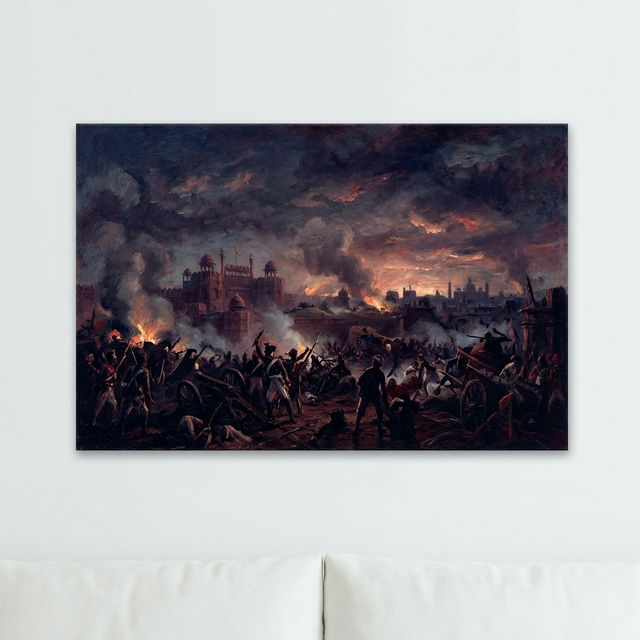
On September 14, 1857, British forces under Brigadier John Nicholson stormed Delhi. The fighting was brutal — street by street, house by house. Nicholson himself was mortally wounded during the assault.
As Delhi fell, Zafar fled the Red Fort — the very symbol of Mughal imperial power — and hid at Humayun's Tomb, about 10 km away. He did not fight. He did not rally his troops. He ran.
On September 20, Captain William Hodson arrived at Humayun's Tomb with a small force. Zafar surrendered without resistance. Historical accounts describe him as trembling and begging for his life. His sons — Mirza Mughal, Mirza Khizr Sultan, and Mirza Abu Bakht — were captured and executed publicly at Khooni Darwaza (the "Bloody Gate") by Hodson.
In January 1858, Bahadur Shah Zafar was put on trial. The charges were severe:
He was found guilty on all four charges. The sentence was exile to Rangoon, Burma, where he died on November 7, 1862 — a broken, powerless old man, buried in an unmarked grave.